Between the capes
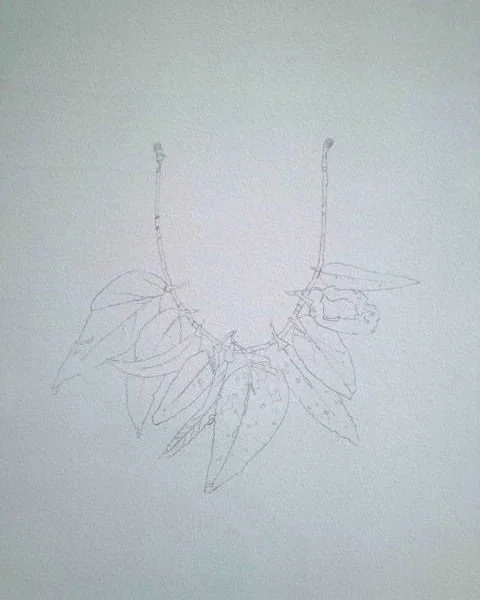
Whilst on residency in 2012, the artist collected dried leaf matter from two opposing ends of Bruny Island, Tasmania. Whilst navigating wild weather she focused on weaving, recalling and repeating certain walking pathways, finally adorning and returning woven neck pieces to the locations of origin. Each piece once finished was returned to the end point of the related pathway and left. The artist later developed a process of drawing and embellishing paper replicas with embroidery, aiding in memorialising the original leaves.
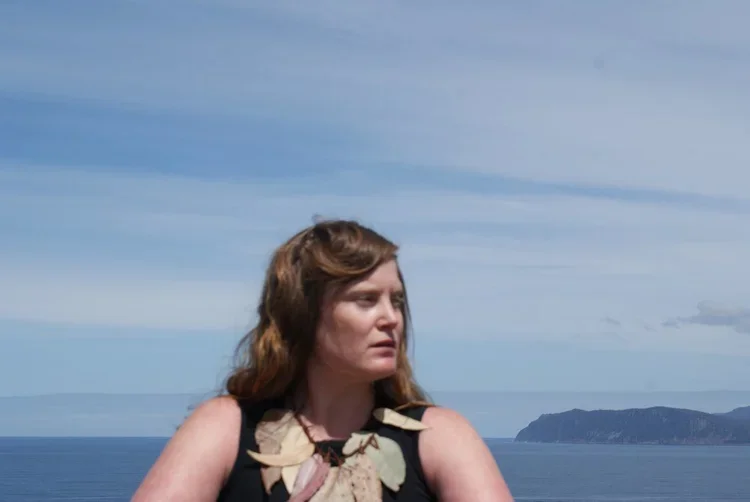
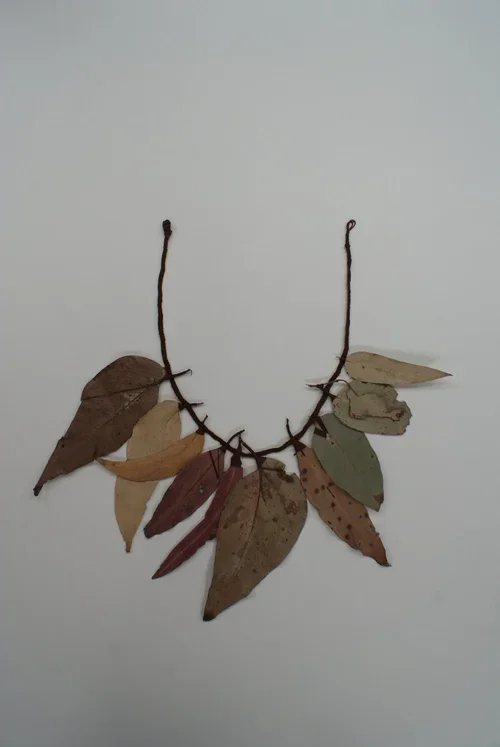
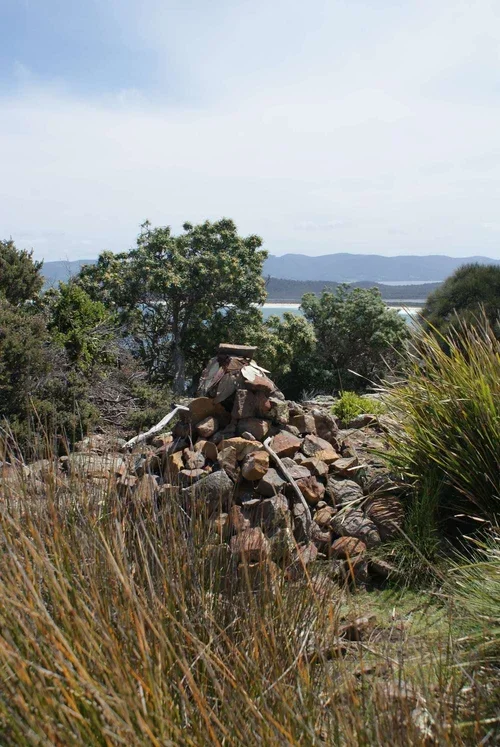
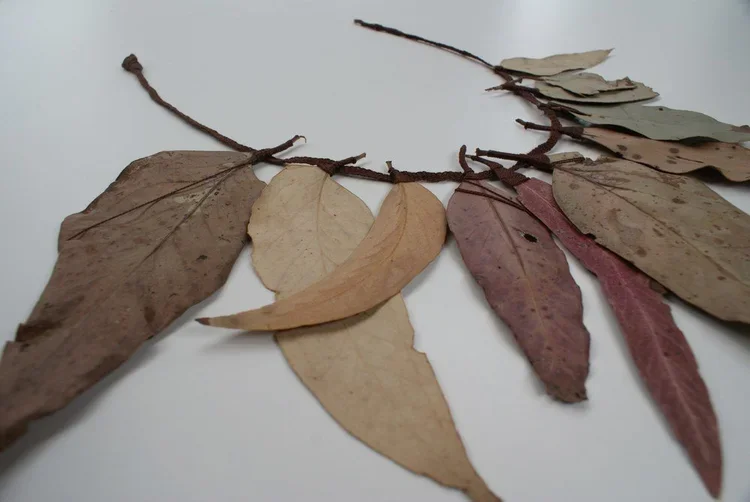
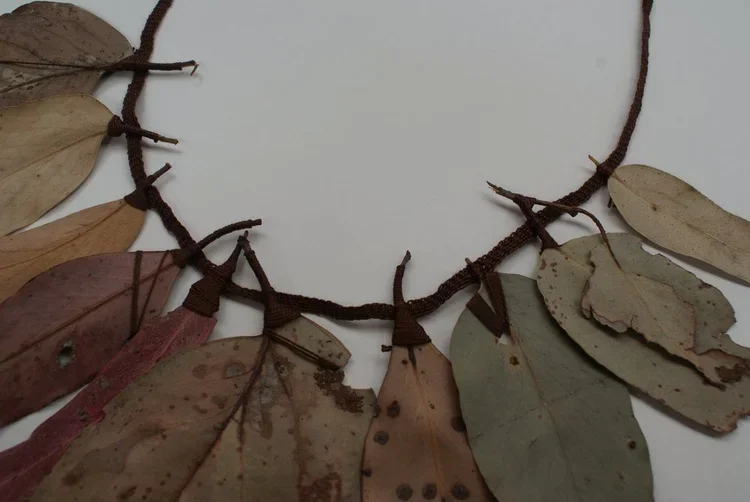
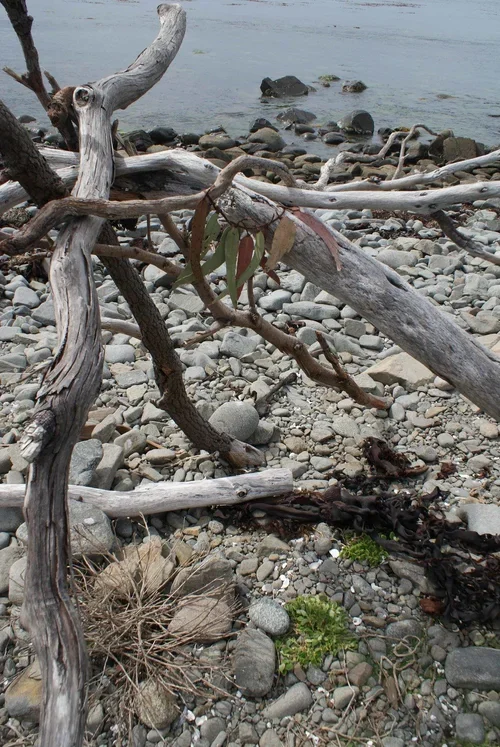
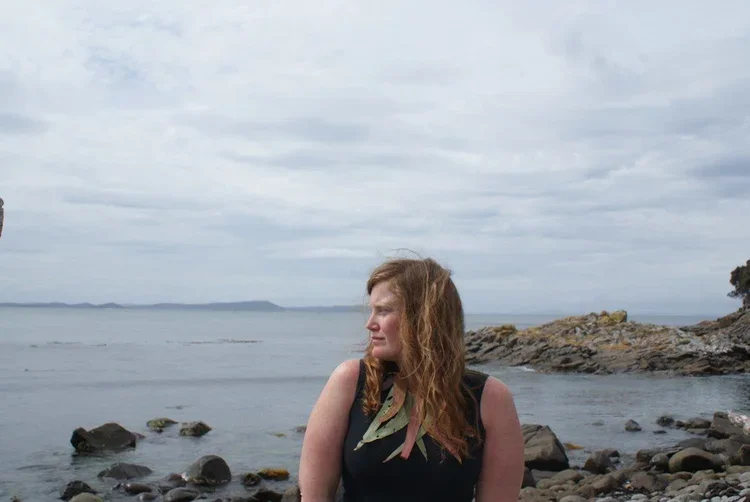
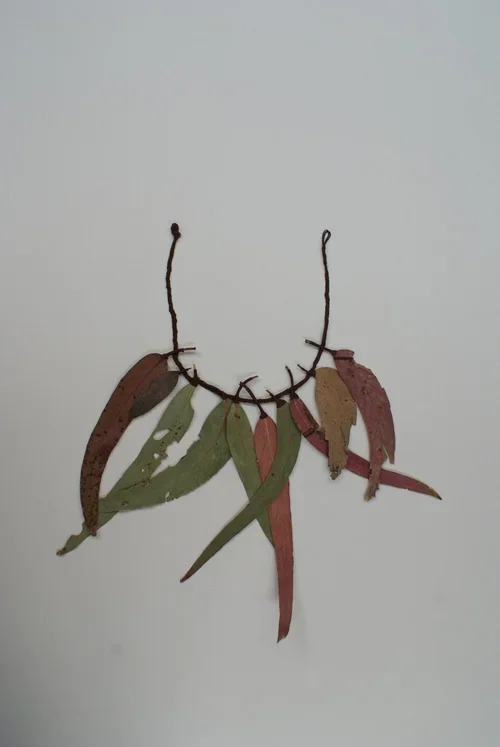
Images 1-8: Northern and Southern Cape Diamonds, 2012, necklace from site specific performance: French cotton and found Australian native leaves, dimensions variable.
In association with the Bruny Island Residency, Tasmania, Australia.
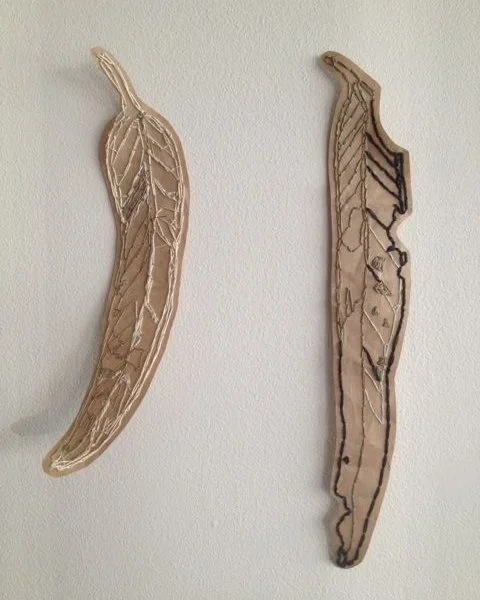
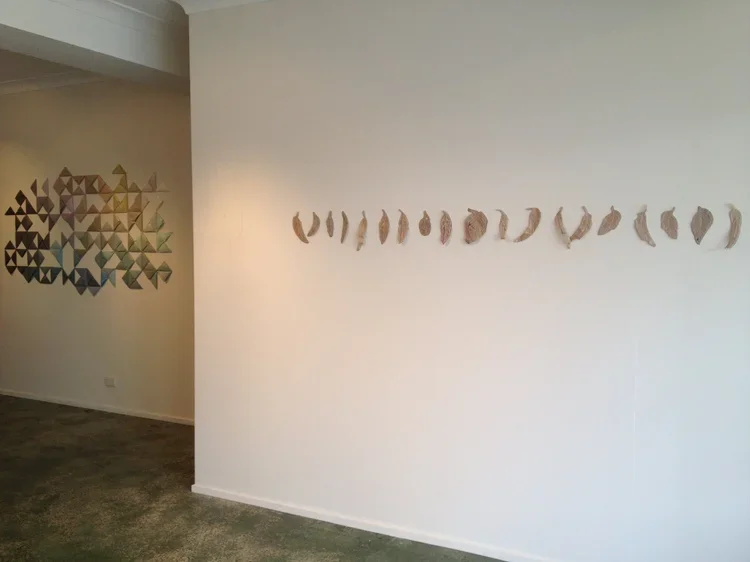
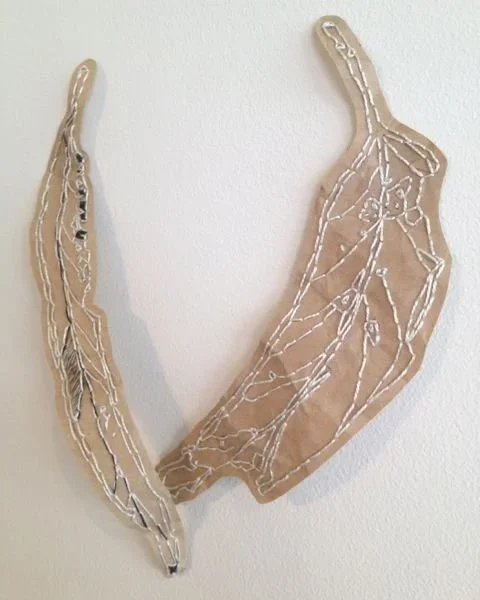
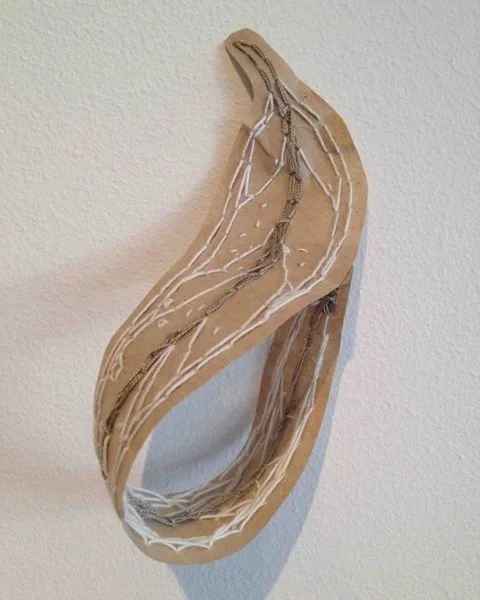
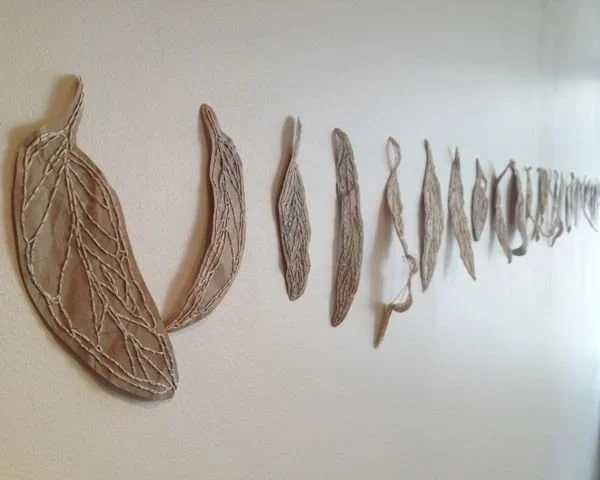
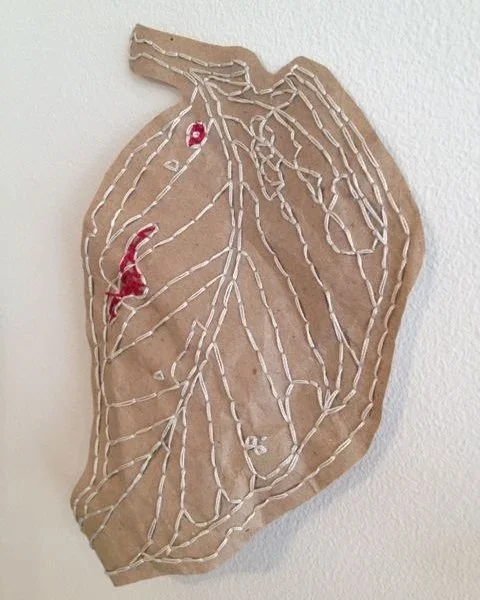
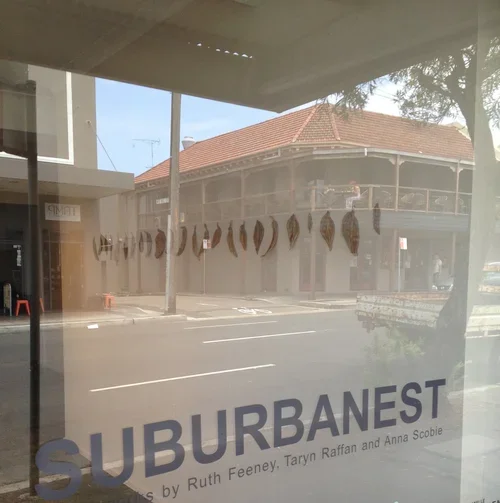
Installation images 9-16: cape leaves, 2012, brown packaging paper, French cotton and silk thread. 20 leaves, approx. 20cm x 10cm each, surburbanest, Paperplane Gallery, 2012.
Upon first seeing Anna Scobie’s Don’t let the grass grow (2012), I had the urge to say “Beetlejuice” three times in quick succession. The neat, striped fence pickets, suspended precariously on their spindly legs, dwarf the house they are meant to protect – keeping in as much as they keep out. Like Tim Burton’s 1988 film, Scobie’s sculptures pull the domestic apart at the seams, revealing the absurdity of our social divisions. Her playful wooden carvings are separated into two camps (the ‘straightie-one-eighties’ and the ‘can’t-change-your-spots’) and evoke children’s toys or oversized chess pieces. The serious business of suburban tribalism, of marking out one’s territory and its people as superior to another, is revealed for what it is – little more than a game.
Her sculptures are part of suburbanest, an exhibition of three women artists interrogating what it means to live within a domestic sphere in 2012. The works by Scobie, Ruth Feeney, and Taryn Raffan explore how identity is shaped by ideas of domestic ritual and nest making.
However, it is the concept of comfort, of what that constitutes and our means of achieving it, which is perhaps the most revealing. In earlier times, comfort was a gift of the divine. In Greek mythology, the goddesses Hestia was among the first generation of Olympians and the keeper of the hearth – the source of warmth and centre of the home, as well as the site of offerings to all other gods. Now, as with so many other things, comfort has become aspirational and consumable – a state of inert contentment to be achieved not through offering but through purchase.
As such, it is a source of some delight that the works in suburbanest offer a way out of this ennui; that they articulate new possible means and meanings of comfort.
Feeney’s practice is concerned with the thoughtful arrangement of everyday objects into intricate, inherently temporary, patterns and forms. Previously, she has used gingerbread men, spices, and even plants to construct large circular works – at once mandala and lace doily. Her work here has progressed, yet continues to explore the tension between the spiritual and performative nature of domestic (and so often women’s) labour. In Stock Standard (2011), Feeney has transformed that most disposable and mundane of objects – the plastic shopping bag – into a meditation on colour, ritual, and form. The repetitive and precise action of folding the bags is palpable – the sound of crunching plastic hums under the smooth tessellations. Order is brought to bear to create something truly beautiful and yet, like the domestic worlds and relationships we build, threatens to fall apart and be thrown away at any moment.
Raffan’s body of work comes out of a recent residency she undertook on a remote island on the south-eastern coast of Tasmania. Living for a week in a converted shipping container as torrential storms forced themselves through gaps in the unfinished walls, it might seem as far from the comfort of the domestic as possible. And yet, faced with the elements and isolation, Raffan uses found objects from nature to construct a new sense of order and belonging. Recalling the childish instinct to collect shells or other objects of curiosity, Raffan’s works show a deep interest in the relationship between body and nature. Where the modern domestic marks human in and nature out, Raffan seeks to create a new synthesis and more sustainable relationship with our external world – formulating new possibilities for comfort outside of consumer habits and identities.
These three artists lay the domestic bare; its rituals and fabrications are picked over, at times playfully, and at others with earnest meditation. Like the care with which we decorate our homes, they reveal a pride in their work and suggest a yearning for something so much more.
Exhibition text: Peter Johnson, surburbanest, Paperplane Gallery, 2012.